
Beachy Head Lighthouse
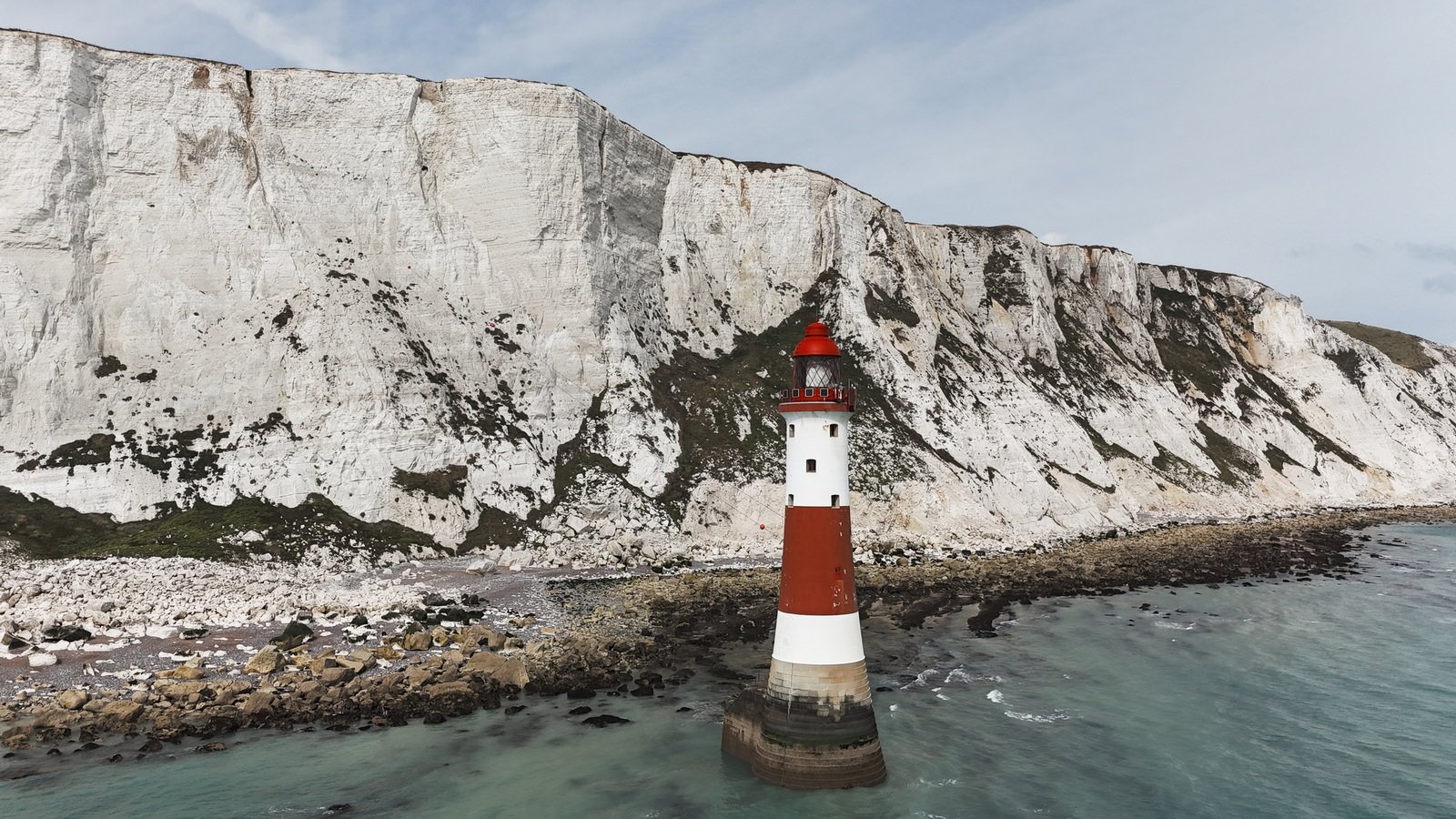
Standing proudly at the foot of the dramatic white chalk cliffs of East Sussex, Beachy Head Lighthouse is one of the most iconic coastal landmarks in England. Rising 141 feet (43 meters) from the rocky shoreline, the tower was built between 1900 and 1902 to guide ships navigating the perilous waters of the English Channel, where hidden reefs and frequent fog made sailing treacherous.
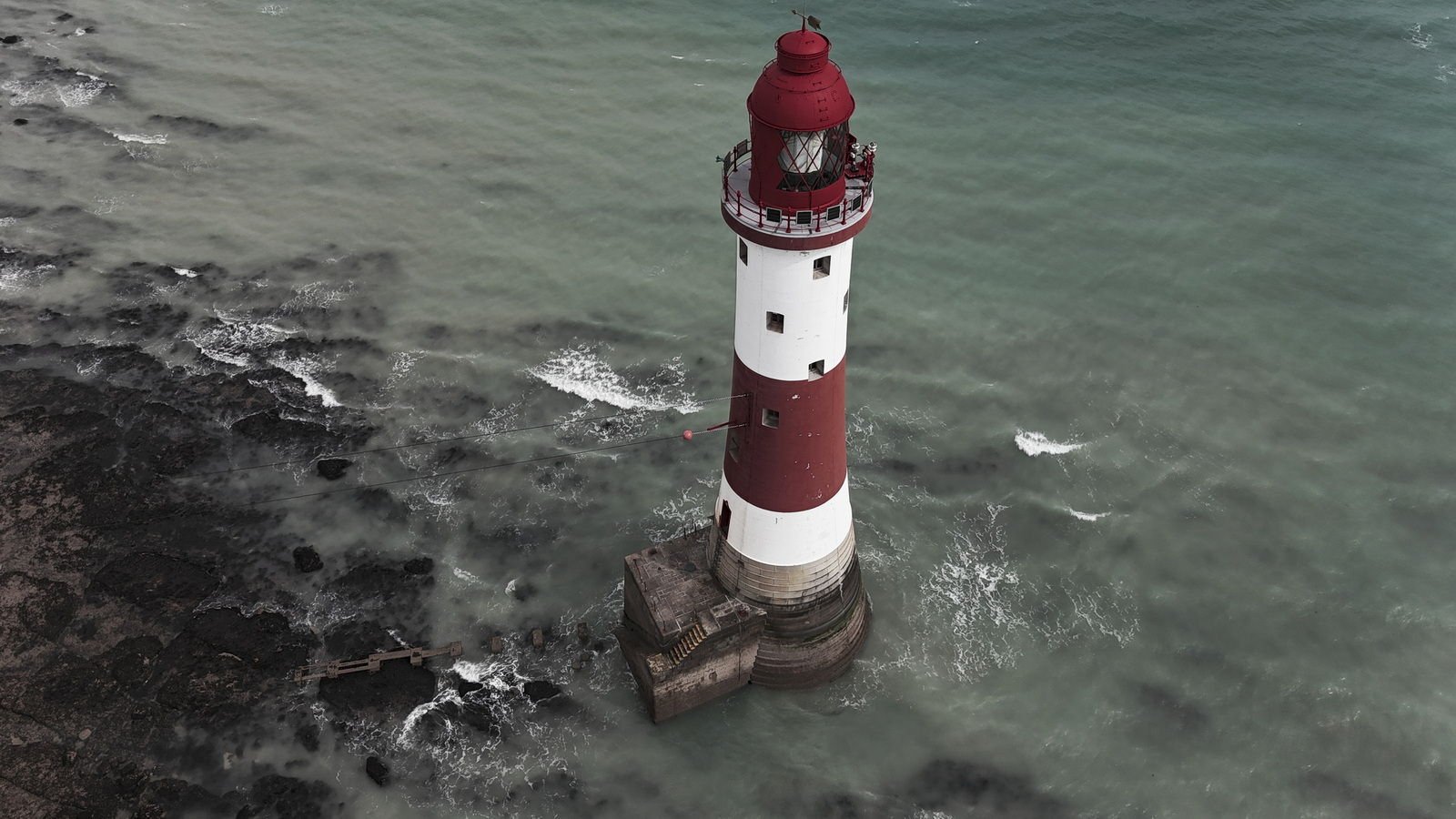
The lighthouse’s striking design features alternating red and white bands, making it instantly recognizable against the stark white cliffs and the deep blues of the sea. Originally powered by oil lamps and later electricity, it was fully automated in 1983, with no keepers stationed there today.
Unlike many lighthouses, Beachy Head is unusual in its position—it was constructed directly at sea level, rather than on the cliff itself. This placement was carefully chosen to provide maximum visibility to passing vessels. Today, its powerful light still flashes every 10 seconds, reaching up to 26 nautical miles out to sea.
The surrounding landscape is just as captivating. Beachy Head, the highest chalk sea cliff in Britain at 531 feet (162 meters), offers sweeping panoramic views of the English Channel and the South Downs. The cliff-top walks are popular with hikers, photographers, and history enthusiasts alike.
Though modern navigation technology has reduced the reliance on lighthouses, Beachy Head Lighthouse remains a beloved heritage structure and symbol of maritime safety. It’s also a favourite subject for artists and photographers, especially when viewed from the cliff tops above at sunrise or sunset, when the tower glows warmly against the sea.
Walking Route: Cow Gap to Beachy Head Lighthouse
Start Point: Cow Gap
End Point: Beachy Head Lighthouse (viewed from the cliffs above)
Difficulty: Moderate
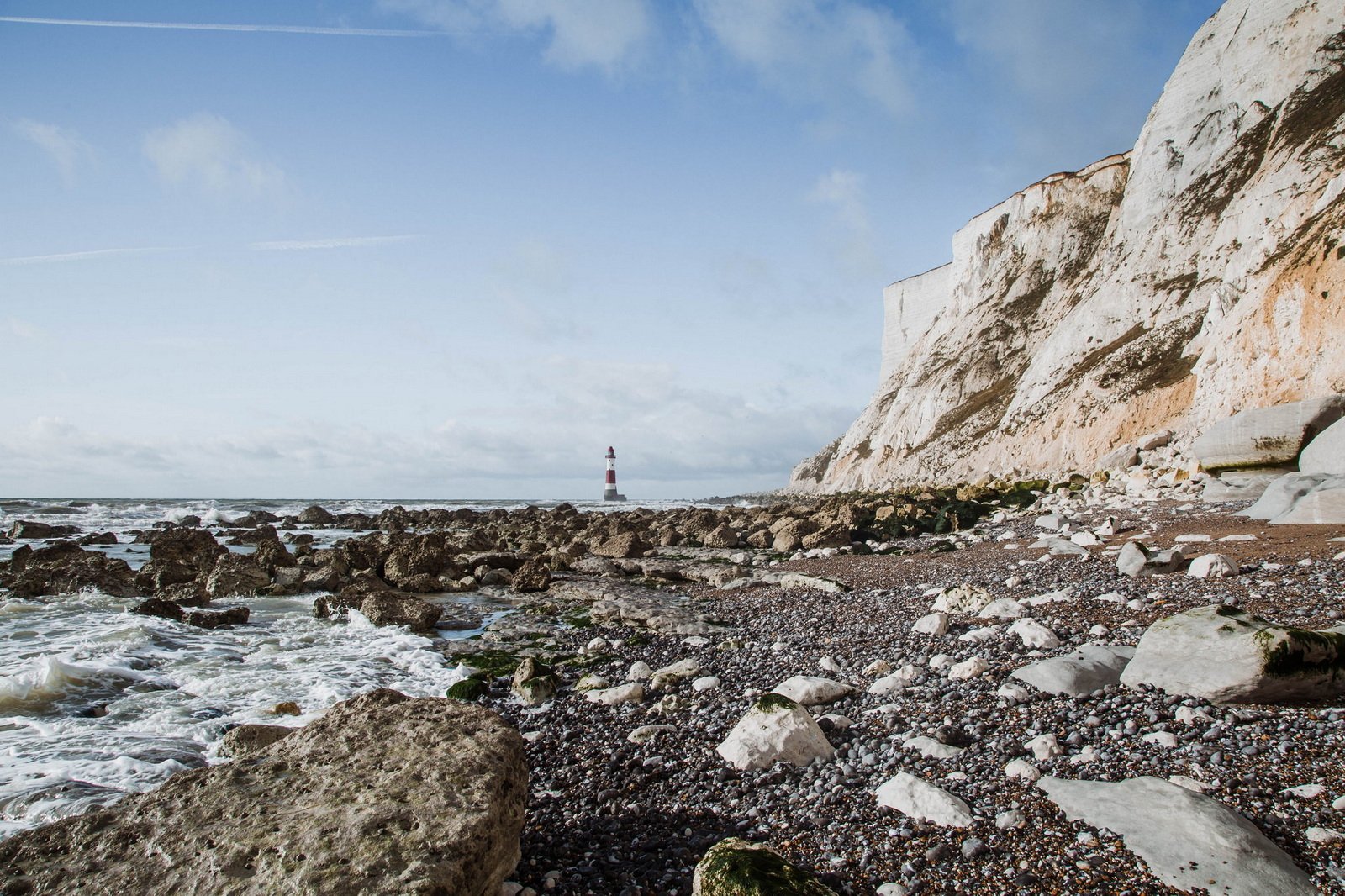
Terrain: Rocky beach, chalk cliffs, narrow footpaths
Tide Awareness: Critical — Only attempt at low tide
Quick Overview
Distance: ~1.5 miles (2.4 km) one way
Time: ~1–1.5 hours each way.
Best Time: Low tide only — lighthouse is inaccessible otherwise
Why Go: This is one of the few ways to get up close to the lighthouse on foot (from below)
Important Notes
Check the tide times before you go. You must start and return within the low tide window. Getting caught by the tide can be dangerous.
The beach is made up of loose rocks, seaweed, and slippery chalk — wear sturdy shoes with good grip.
There are no facilities — bring water and essentials.
Do not attempt the walk in poor visibility or bad weather.
Step-by-Step Directions
Start at the Cow Gap Steps
From Beachy Head Road, follow the signed path down toward Cow Gap.
Descend the steep wooden steps to the beach — these can be slippery.
Turn Right at the Beach
Once on the rocky beach, head west (right) toward the lighthouse.
You’ll pass under the towering white chalk cliffs. Keep an eye out for rockfalls.
Scramble Along the Base
The terrain is uneven: you’ll need to scramble over boulders, seaweed-covered rocks, and tide pools.
Watch for wet, slippery chalk patches.
Approach the Lighthouse
After about 30–40 minutes, the Beachy Head Lighthouse comes into full view.
You can walk around the base if the tide is still low. Be cautious of waves.
Return Before the Tide Turns
Head back the same way you came, leaving plenty of time before the tide rises because if you don’t, you will die, or you will have to wait a long time before the tide goes back out.




Recent Comments